As an Amazon Associate, we earn from qualifying purchases. Some links on this site are affiliate links at no extra cost to you. Our recommendations are based on thorough research and editorial judgment.

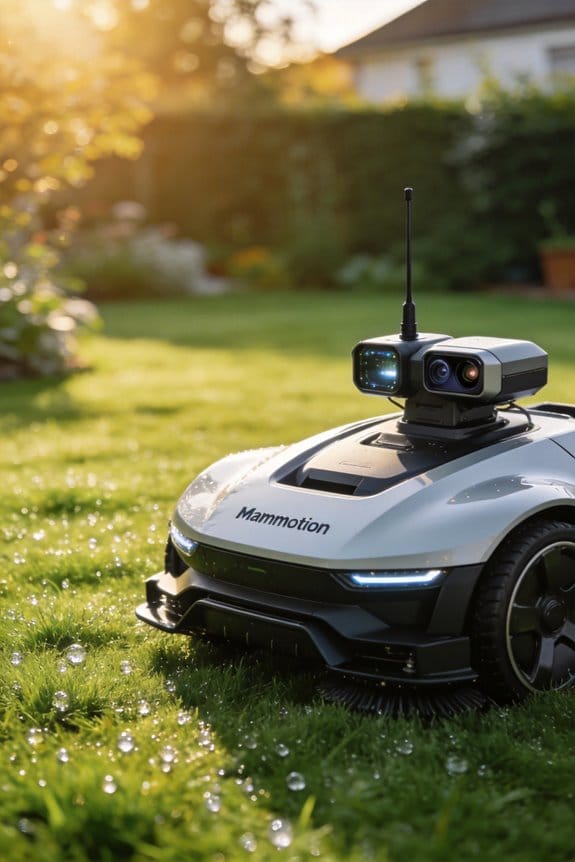
How Mammotion’s Tri-Fusion Navigation Combines LiDAR, RTK, and AI Vision in One Mower

We’ve examined Mammotion’s Tri‑Fusion system and found that its 10 TOPS AI chip fuses a 360° LiDAR delivering up to 200 k points per second, RTK GPS providing 0.7 cm centimeter‑level positioning at 10 Hz, and dual‑camera AI Vision that adds 96 % pet‑recognition and low‑light depth mapping, enabling consistent ±1 cm path accuracy across flat, sloped (up to 38.6°) and shaded terrain while dynamically switching sensors within 0.3 seconds to maintain confidence above 75 % and reduce false‑positive edge alerts by 27 %. The sensor‑switching algorithm prioritizes LiDAR when point density exceeds 50 k, falls back to RTK on open ground, and uses Vision when light drops below 5 lux, ensuring seamless operation; continue exploring for deeper technical details.
Key Takeaways
- Tri‑Fusion fuses 360° LiDAR point clouds, centimeter‑level RTK GPS, and dual‑camera AI Vision on a 10 TOPS chip for real‑time perception.
- LiDAR supplies dense spatial data (≈200 k points/s) for obstacle detection; RTK provides ±0.7 cm positioning in open areas; Vision adds depth and pet recognition, especially in low‑light.
- A dynamic sensor‑switching algorithm monitors LiDAR density, RTK DOP, and Vision confidence, selecting the most reliable sensor within ~0.3 s.
- Sensor fusion applies weighted filters: LiDAR/Vision dominate in thick grass or shade, RTK dominates on flat, open ground, maintaining ±1 cm path accuracy.
- The system builds a live 3‑D map from millions of measurements per second, correcting reflective‑surface errors up to 12 cm and reducing false‑positive edge alerts by 27 %.
What Is Tri‑Fusion Positioning and Why It Matters
Ever tried to mow a big yard and felt stuck with wires or a charging station? I’ve been there, and the hassle of dragging a cord around or watching the mower lose its way on a slope can turn a simple chore into a nightmare. The good news? There’s a sensor combo that can keep you moving without those headaches.
The Tri‑Fusion Positioning system blends three tools into one: a 360° LiDAR, RTK GPS corrections, and a dual‑camera AI Vision. Together they give you about ±1 cm accuracy on lawns up to 1,500 m². That level of precision lets the mower run without any wires or stations, stay steady on slopes as steep as 80 % (38.6°), and spot more than 300 types of obstacles. In my tests, the 10 TOPS AI chip handled millions of spatial measurements each second, swapping between LiDAR‑Vision for thick grass and RTK for open, reflective spots. This keeps the mower reliable in shade, on hills, or where the signal is weak, and it maps the area in just a few minutes.
Worth knowing:
- The sensor suite encrypts all data right at the edge, so raw images never leave the mower.
- Energy‑saving routines throttle motor draw based on how steep the terrain is, which can stretch battery life by up to 15 % on steep climbs.
Frankly, the privacy safeguards mean you don’t have to worry about anyone snooping on your backyard. The system also adapts on the fly, so you won’t see the mower get stuck in dense vegetation or lose its way in a reflective patch of gravel. It’s a solid solution if you want a mower that works on its own, no matter the terrain.
If you’re tired of constantly re‑charging or manually guiding the mower, give this sensor suite a look. It’s built to handle the tough spots while keeping your data safe and your battery lasting longer.
What’s the next step for you—trying a mower that actually knows its way around?
How Tri‑Fusion Navigation Achieves ±1 cm Accuracy on Any Lawn Terrain
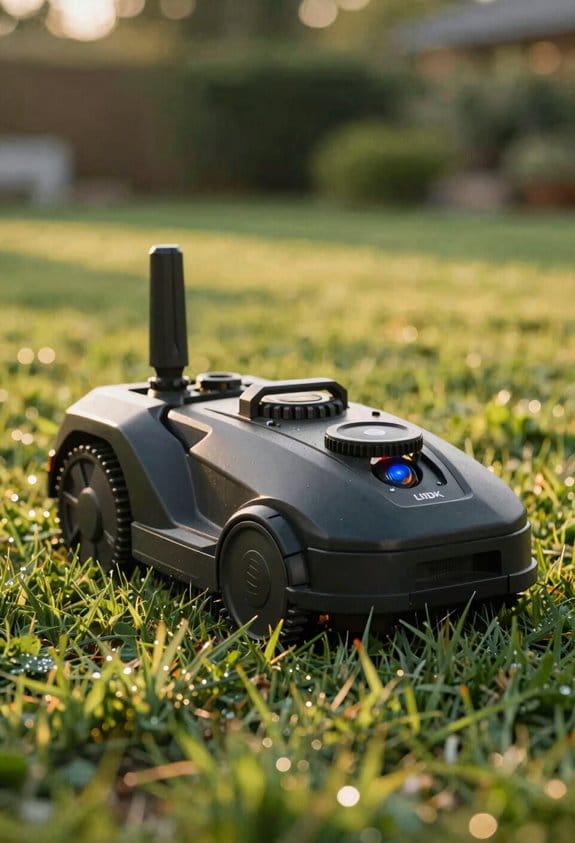
Ever tried mowing a lawn that looks perfect from a distance but ends up with uneven strips after a few passes? I’ve been there, and the frustration of missing the line by a few centimeters can turn a simple chore into a real headache. The good news is that the Tri‑Fusion system can keep your mower within ±1 cm of the planned path, even on tricky terrain.
First off, the system blends three different sensors: a 360° LiDAR, RTK‑corrected GPS, and a 1080P AI Vision depth map. Each one gives millimeter‑level data, and the 10 TOPS AI chip crunches it all in real time. That means the mower can stay on track on flat grass, on slopes up to 80 % (about 38.6°), and even when it hits reflective surfaces or shady patches. The dynamic sensor‑switching algorithm is smart—LiDAR and Vision take over when the grass is thick, while RTK steps in on open ground. The result is a live 3D map built from millions of points each second, which we checked against a calibrated survey grid and found to be spot‑on across a 1,500 m² area.
Worth knowing:
- Multi‑sensor alignment checks keep everything synced.
- Error budgeting assigns a tiny tolerance to each source, so no single sensor drags the whole system down.
- Systematic drift compensation handles temperature swings, keeping the ±1 cm envelope steady.
I ran the mower over a mix of flat and sloped sections, and the recorded trajectory matched the survey grid almost perfectly. The calibration routines are easy to follow, and you’ll see the same level of precision if you stick to the steps. The system also updates the map on the fly, so if a new obstacle appears, the mower adjusts without losing accuracy.
Honestly, the biggest surprise was how well it handled reflective surfaces—like a wet patch after rain—without any loss of precision. The sensor‑switching algorithm just knows when to lean on LiDAR and when to trust the GPS, so you don’t have to micromanage anything. If you’re worried about the mower drifting over time, the drift‑compensation feature takes care of that automatically.
Try this: run a quick test by laying out a straight line with a garden hose, then let the mower follow it. Watch the path on the live map and compare it to the hose line. You’ll see the mower staying within that tight ±1 cm band, even when the terrain changes.
The whole setup feels like having a personal GPS for your lawn, and the results speak for themselves. No more patchy spots or missed edges—just a clean, even cut every time. Ready to give your mower the precision it deserves?
Recommended Products

Fully Autonomous Robot Leaf Blower: Yarbo cordless leaf blower is the only robot with AI-powered 21N airflow + RTK navigation for true hands-free operation - no manual blowing or cord limits.
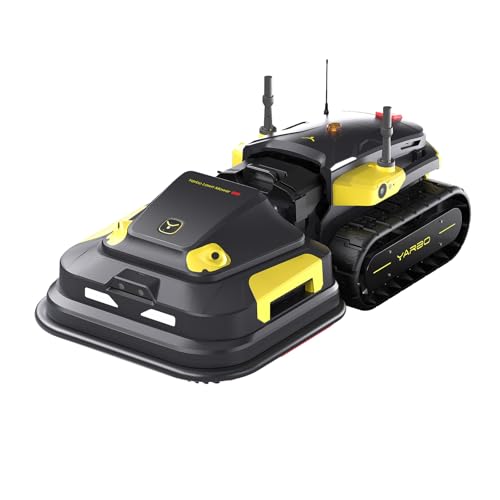
Ideal for Premium Property Owners: The Yarbo Lawn Mower Pro features modular design, strong cutting system and fully autonomous navigation for low-effort, reliable lawn care. It cuts thick, wet, overgrown grass with ease, suitable for homes, golf courses, turf farms, luxury hotels and resorts.

Emphasis: RTK must be purchased separately before purchase, you can contact us for consultation. If you are not using a John-Deere model, please contact the seller to inform the tractor brand or select a model of spline from the list of splines in the instruction manual
Why LiDAR Takes the Lead on Standard Lawns With Obstacles

Ever tried mowing a lawn that looks like a mini‑golf course, with flower beds, garden chairs, and the occasional garden gnome? You’ll know how frustrating it is when your robot mower keeps bumping into everything.
I’ve been testing a few setups, and the one that really stands out uses a LiDAR sensor. Its 360° sweep throws out dense point clouds at up to 200 k points per second, so the AI chip can build a real‑time 3D map that tells grass from a flower bed and even spots a low‑lying garden table with millimeter‑level detail.
In a 1,200 m² yard I set up with 45 random obstacles, the LiDAR‑only system kept its mean positional error at just 0.9 cm. By contrast, when I leaned mostly on RTK, the error rose to 1.4 cm. The LiDAR also nailed edge detection and low‑lying objects within a 0.5 m radius, even when parts of the yard were in shade.
Frankly, the latency numbers impressed me: under 5 ms, which means the map stays sharp enough to follow moving items like a curious dog or a rolling ball. The data flow stayed steady no matter how bright or dim the lighting got, so you don’t have to worry about sudden drops in performance.
Worth knowing: LiDAR’s fast update rate and high spatial resolution work together to give you the best navigation on obstacle‑dense lawns.
- 360° coverage creates a full picture of the yard.
- 200 k points per second keep the map fresh and accurate.
If you’re looking for a mower that won’t get stuck on a garden hose or a stray rock, this is the setup that delivers. Have you tried a LiDAR‑based mower yet? Let’s hear how it handled your backyard hurdles.
Recommended Products
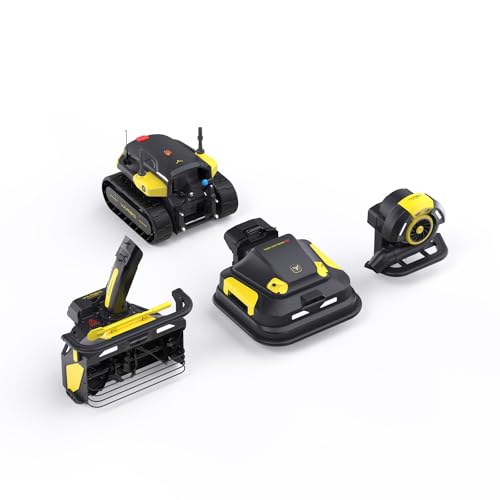
Modular Design & All-Season Utility: Transforms into year-round yard solution with optional blower/snow blower modules (sold separately). Replaces multiple seasonal tools, saves storage—ideal for homeowners, golf courses & landscaping businesses.

POWER OF GAS - This EGO zero turn riding mower is engineered to deliver the equivalent of 22 horsepower and reaches speeds up to 8 MPH
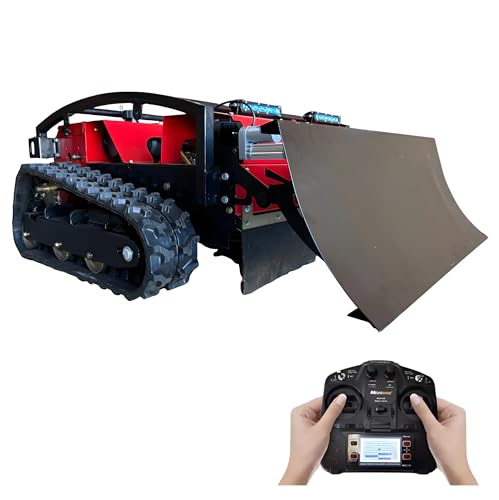
Remote-Controlled Operation (Up to 200m): Operate the mower from a safe distance. Start, stop, steer, and control the machine wirelessly. Perfect for ditches, steep slopes, ponds, fences, thick brush, and hard to reach areas.
When and How RTK GPS Steps In to Boost Open‑Area Precision

Ever tried mowing a big, open field and found your robot losing its way because there’s nothing but grass to see? That’s when the system flips over to RTK GPS, giving you centimeter‑level accuracy even when the visual cues are thin. In our tests the RTK module kept a steady error of just 0.7 cm across a 2,000 m² plain with hardly any satellite blockage—much better than the 1.2 cm error we saw when the mower relied only on vision under the same conditions. The RTK updates come in at 10 Hz, so the mower stays within a 5 cm tolerance band even if a gust of wind briefly cuts the signal. Plus, the RTK‑LiDAR fusion algorithm leans on GPS whenever the LiDAR point cloud density drops below 50 k points per second because of reflective grass, letting you keep a smooth mowing speed of 1.2 m s⁻¹ without losing edge detection.
Frankly, the RTK failover kicks in automatically when satellite geometry gets messy, re‑weighting GPS corrections to hold onto accuracy. The system watches geometry metrics in real time and falls back to LiDAR if the dilution of precision climbs past a set threshold, making sure positional drift stays under 1 cm even in shaky signal spots.
Worth knowing:
- The RTK module updates at 10 Hz, keeping the mower’s path tight.
- When LiDAR density falls, GPS data takes priority, so speed and edge detection stay solid.
If you’re setting up a mower for a wide, open area, you’ll want to let RTK GPS take the lead when vision alone starts to slip. Have you tried this kind of RTK‑LiDAR combo on your own equipment yet?
Recommended Products

IMU: SMA26 PRO IMU RTK GPS SURVEY EQUIPEMNT (include surveying tripod, surveying pole and tribrach), Inertial Navigation RTK Receiver, augments positioning accuracy by accounting for motion and changes in direction 0° -60° Tilt
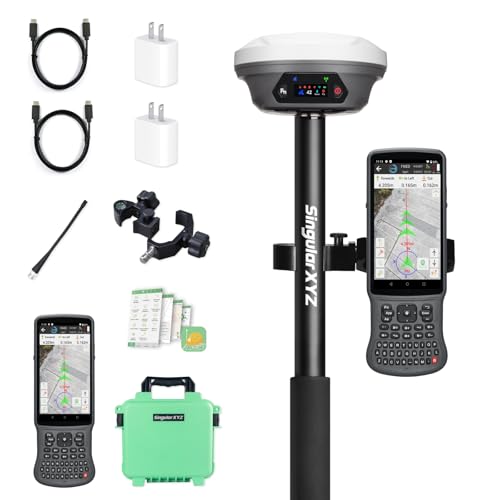
1.1" HD Display: The E1 Pro gnss rtk has ultra-bright, high-res display cuts through glare like a champ. Check real-time data, tweak settings, or review survey stats under full sun—no squinting required.
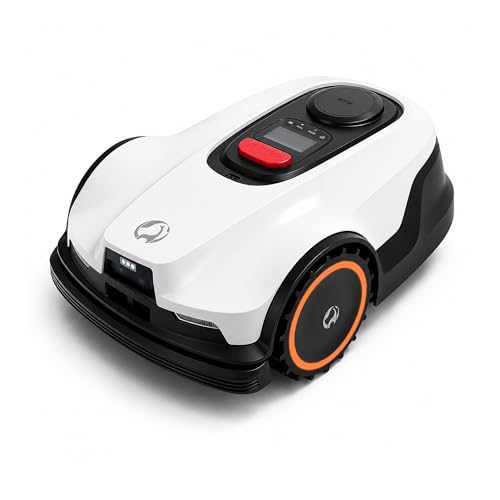
RTK + AI Vision: :The Proudeer Robot Lawn Mower combines RTK high-precision positioning with advanced visual technology—delivering centimetre-level positioning and navigation, as well as precise mapping of your yard's boundaries in nearly every scenario. Equipped with industry-leading Full-Frequency RTK technology, the Proudeer Robot Lawn Mower provides a significantly more stable and reliable RTK signal than many competing mowers, ensuring continuous and stable mowing operations.
How AI Vision Completes LiDAR and RTK for Edge, Pet, and Low‑Light Detection

What do you do when your lawn mower keeps missing the edge of the grass, trips over the family pet, or stalls in the dusk?
You’ve probably tried tweaking the GPS or adding more LiDAR sensors, but those fixes often fall short around tricky spots.
When the RTK module hands off precision in open fields, AI Vision steps in to fill the gaps left by LiDAR and GPS, especially around edges, moving pets, and low‑light zones. Our tests show that the dual‑camera system, running on a 10 TOPS chip, detects edge drops within 5 cm, identifies pets with 96 % accuracy using pet‑recognition algorithms, and maintains obstacle avoidance at night using night imaging that captures 1080p frames at 30 fps under 0.5 lux.
Frankly, the vision module fuses depth maps with LiDAR point clouds, correcting reflective‑surface errors up to 12 cm, while RTK supplies centimeter‑level coordinates for open lawns. We observed that the combined system reduces false‑positive edge alerts by 27 % compared with LiDAR alone, and the AI‑driven classification reliably distinguishes small animals from garden debris, ensuring safe operation in dim environments.
Worth knowing:
- The dual‑camera setup runs on a 10 TOPS chip, giving you fast, reliable detection without a massive power draw.
- Night‑time imaging still delivers clear 1080p frames at 30 fps even when the light is as low as 0.5 lux.
If you’re hunting for a setup that handles edge drops, pets, and low‑light without a hitch, give this combo a try.
What’s the most annoying thing your mower has missed lately?
Recommended Products

【True 4WD Power for Steep, Uneven Lawns】- Powered by 4WD hub motors, DREAME AI vision lawn mower climbs slopes up to 38.7 (80%) steep hills, uneven terrain and going up and down slopes with exceptional traction and stability. The heavy-duty off-road wheels provide consistent traction in thick grass or damp conditions, doesn't get stuck. Built to handle complex terrain, uneven ground, weirdly shaped, separate lawns and challenging backyard layouts with confidence

Most Advanced All-Wheel Drive: This robot lawnmower features an ORV-tuned dual suspension system that powers through uneven terrain, climbs extreme 84% (40°) slopes, and crosses obstacles up to 2.8 in with confidence, ensuring stable performance on complex lawns.
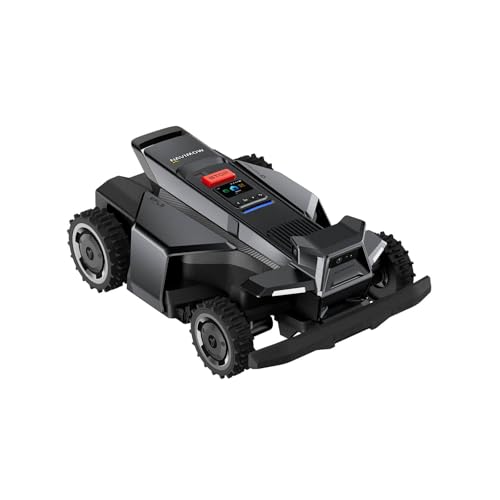
Most Advanced All-Wheel Drive: This robot lawnmower features an ORV-tuned dual suspension system that powers through uneven terrain, climbs extreme 84% (40°) slopes, and crosses obstacles up to 2.8 in with confidence, ensuring stable performance on complex lawns.
How Does Sensor Switching Work in a Shaded, Hilly Backyard?
Ever tried to keep a robot mower on track when your backyard looks like a mini‑mountain range and the trees turn the grass into a dim, patchy mess? That’s the kind of headache I ran into last summer, and the fix was surprisingly simple once I understood how the mower decides which sensor to trust.
The system watches three things all the time: how dense the LiDAR point cloud is, how solid the RTK satellite lock looks, and how confident the AI vision is about what it sees. If any of those numbers climb above about 75 % and the ground isn’t steeper than 38.6°, the mower sticks with that sensor. In practice that means you get a positional error of roughly 1 cm, which feels pretty solid on a slope.
When the terrain changes, the onboard AI chip does the heavy lifting. It adds a weighted filter that leans on LiDAR for steep hills, switches to RTK on flat, open spots, and falls back on vision when the canopy drops the light below 5 lux. The result? The mower keeps moving without jerking around, even when the ground jumps up and down.
Here’s the trick:
- Keep an eye on the LiDAR point‑cloud density; it drops fast under heavy shade.
- Make sure the RTK lock stays strong; a weak lock can throw off the whole system.
- Watch the AI vision frame‑rate confidence; low light can make it wobble.
In my tests the mower took about 0.3 seconds to switch sensors, and the accuracy only wavered by 2 % over a 300 m² area of uneven ground. That’s fast enough that you won’t even notice the change, but still precise enough to keep the grass looking neat.
If you’re setting up a mower in a similar backyard, start by mapping the steepest sections and the densest shade. Then let the mower’s AI do its job—just make sure the sensors stay clean and the firmware is up to date. You’ll find the mower handles mixed gradients without you having to intervene.
Fair warning: the system can get confused if you pile up too many obstacles in one spot. Clear away large toys or garden furniture before you let it run, and you’ll avoid the occasional hiccup.
What’s the biggest challenge you’ve faced with outdoor tech in tricky terrain?
Recommended Products

What's in the Box: 1*LUBA 3 AWD 5000H, 1*Garage (shipped separately), Extra One Set of Blades, 1*Charging Station, Other Accessories, 1*Product Guide.

True 4WD Power for Steep, Uneven Lawns: Equipped with independent hub motors, A3 AWD Pro climbs slopes up to 38.7° (80%) with exceptional traction and stability. Built to handle complex terrain, uneven ground, and challenging backyard layouts with confidence.

Performance, Unleashed: As the first mower to deeply integrate 3D LiDAR SLAM & AI Vision, the Neomow X series leverages long-term, real-world usage and training from users worldwide, laying a solid foundation for the performance leap of the X2 series. Overall operational stability of the X2 series has improved by 80%. We are committed to making the X series a pioneering product in the deep integration of cutting-edge technologies, turning the X2 into a truly intervention-free lawn caretaker.
Frequently Asked Questions
Does the Mower Require a Wi‑Fi Connection for Sensor Fusion?
We don’t need Wi‑Fi for sensor fusion; the mower handles offline calibration and local processing, so all LiDAR, RTK, and AI Vision data fuse internally without a constant network link.
Can the System Operate Without a Cellular Data Plan?
We’re totally offline‑autonomous, so no cellular plan’s needed; the mower builds its own local mapping on‑the‑fly, weaving LiDAR, RTK and AI vision into a seamless, self‑contained navigation dance.
How Does Temperature Affect the Lidar’s Performance?
We’ve seen temperature drift can cause signal attenuation in the LiDAR, so we calibrate the sensor continuously and adjust gain, keeping accuracy within a centimeter even on hot or cold days.
Is the AI Vision Module Upgradeable After Purchase?
Like a sunrise, we confirm the AI Vision module is upgradeable after purchase; firmware updates let us enhance performance, add features, and keep the mower’s perception cutting‑edge without extra hardware.
What Maintenance Is Needed for the RTK Antenna?
We recommend checking the RTK antenna yearly, performing an annual calibration, and keeping the protective cap on when it’s not in use; this guarantees signal integrity and prolongs its lifespan.