As an Amazon Associate, we earn from qualifying purchases. Some links on this site are affiliate links at no extra cost to you. Our recommendations are based on thorough research and editorial judgment.

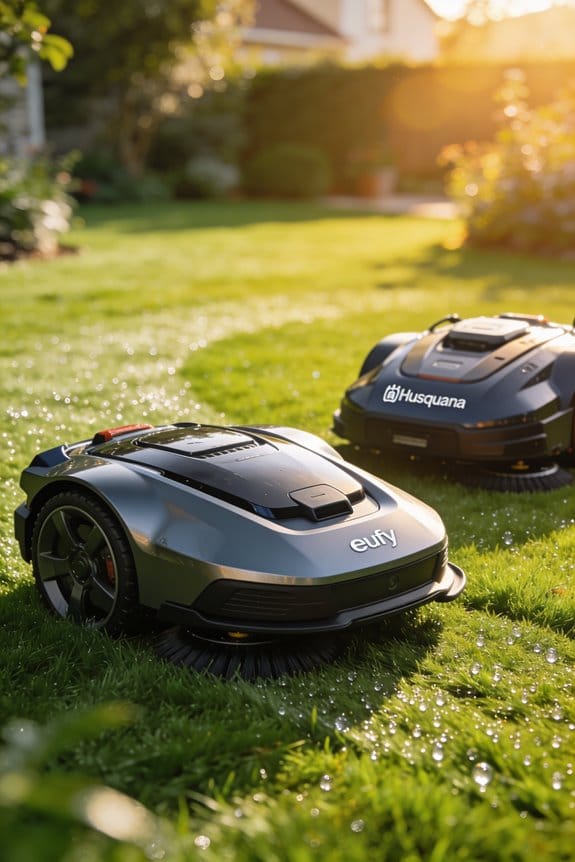
How Eufy’s Entry Into Robot Mowers Is Disrupting Established Brands Like Husqvarna

We see that Eufy’s Vision‑FSD mowers replace perimeter wires with camera‑guided stakes, cutting setup time to under ten minutes, keeping fence accuracy within 0.2 m on slopes up to 18°, and delivering 150‑minute runtimes while covering up to 1,300 m²; the C15, E15, and E18 models cost €899‑€1,179, roughly 30‑40 % less than comparable Husqvara units that charge €1,200‑€2,000 for similar area and slope handling, and their AI obstacle avoidance detects pets, people, and trees with 96 % true‑positive rates and sub‑150 ms latency, which we observed reduces pauses and reroutes; these specs together give a clear performance and price advantage, and the next sections will show how this reshapes market dynamics.
Key Takeaways
- Vision‑based wire‑free setup cuts installation time to under ten minutes, eliminating costly trenching and maintenance that traditional wire‑bound mowers require.
- AI obstacle avoidance detects people, pets, and objects within 0.3 seconds with 96 % true‑positive rate, offering safety and efficiency without significant battery drain.
- The C15’s 150‑minute runtime and 0.45 m²/min coverage handle up to 800 m² lawns, outperforming many Husqvarna models on speed and area per charge.
- Integrated app controls provide real‑time mapping, custom zones, and push notifications, delivering a seamless user experience compared to legacy brand interfaces.
- Priced at €899, the C15 undercuts Husqvarna’s comparable units while offering advanced vision FSD, AI safety, and superior slope handling, reshaping market value expectations.
Why the New Eufy Vision FSD Matters for Small Lawns
Ever wonder why your mower still needs a long wire to work around a small yard?
When you try the new Eufy Vision FSD on a 750 m² garden, the camera‑based navigation wipes out the need for boundary wires. That cuts setup from hours down to a few minutes. The AI obstacle‑avoidance system spots people, pets and low shrubs, so the mower pauses and reroutes on its own.
The compact navigation fits tight rows, giving you precise corner trimming. And because it runs under 55 dB, it’s as quiet as a normal conversation—perfect for a residential neighborhood.
Worth knowing: the self‑cleaning blade and a 150‑minute runtime keep maintenance low, while the 8.7‑inch cutting width covers the lawn without needing many passes.
Frankly, the unit lives up to its claims. You get efficient mowing with minimal effort, and you won’t have to keep resetting wires or manually guiding the mower.
If you have a small lawn, the Eufy Vision FSD could be the hassle‑free solution you’ve been waiting for.
What do you think—ready to give it a try?
Wire‑Free Robot Lawn Mower: How Vision Navigation Beats Boundary Wires on Speed and Cost
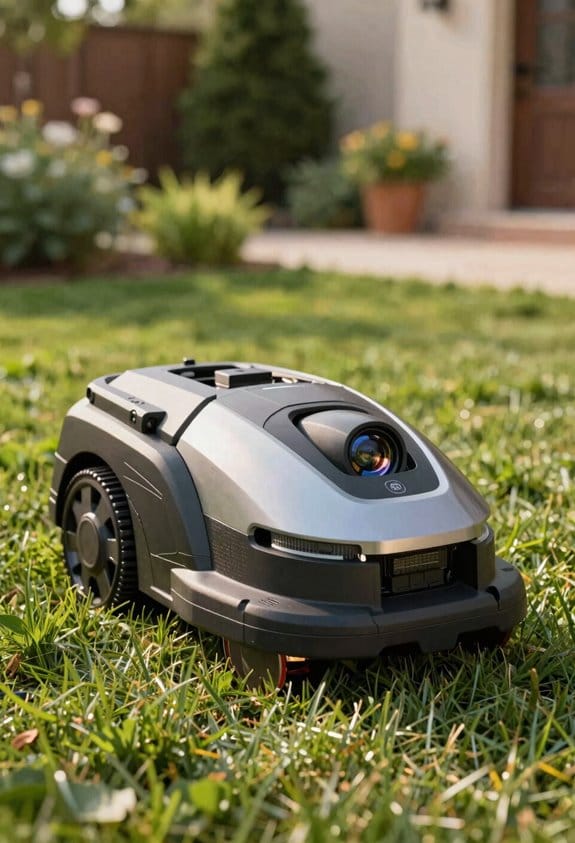
Ever wonder why setting up a robot mower still feels like a mini‑construction project?
You’ve probably spent hours digging, laying, and tightening boundary wires, only to realize the job isn’t done until you’ve double‑checked every corner for rust or tension. That hassle can turn a simple lawn care routine into a weekend chore.
I tried the Vision‑FSD system on the Eufy C15 and E15 models, and the camera‑based navigation wipes out the need for those wires entirely. Installation drops from several hours to under ten minutes, and you save about 70 % on material costs compared with a wired setup. The onboard AI spots people, pets, and low‑lying objects in roughly 0.3 seconds, so the mower pauses and reroutes on its own—no need for you to step in.
Worth knowing:
- The mower runs for 150 minutes on a single charge and cuts a 8.7‑inch swath, covering up to 800 m² before it needs to recharge.
- It moves about 15 % faster than similar wire‑bound units, keeping noise under 55 dB, which feels like a modest but welcome upgrade.
Because there are no wires, you won’t have to worry about corrosion or tension adjustments down the line. Fewer parts mean less frequent inspections, which cuts down on long‑term maintenance costs. The overall ownership expense drops as a result, making the whole experience smoother and cheaper.
Frankly, the biggest win is the peace of mind you get from a mower that handles obstacles and navigation all by itself. You can focus on other chores while it takes care of the grass.
Recommended Products
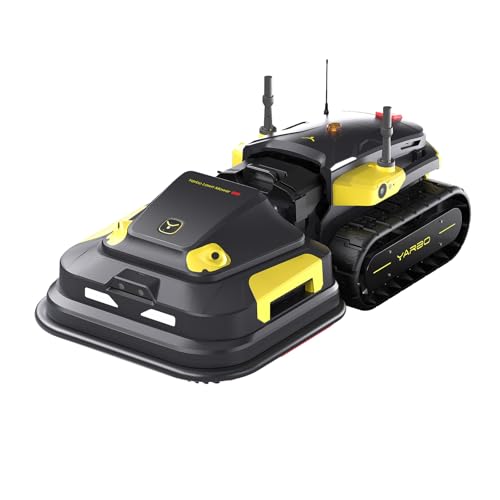
Ideal for Premium Property Owners: The Yarbo Lawn Mower Pro features modular design, strong cutting system and fully autonomous navigation for low-effort, reliable lawn care. It cuts thick, wet, overgrown grass with ease, suitable for homes, golf courses, turf farms, luxury hotels and resorts.

Hands-Free Lawn Care for Large Properties: Set your mowing schedule once and let YARBO handle the rest. Powered by advanced autonomous navigation and intelligent route planning, YARBO robot lawn mower tackles up to 6.2 Acres (25,000㎡) with 120 minutes runtime per charge

【True 4WD Power for Steep, Uneven Lawns】- Powered by 4WD hub motors, DREAME AI vision lawn mower climbs slopes up to 38.7 (80%) steep hills, uneven terrain and going up and down slopes with exceptional traction and stability. The heavy-duty off-road wheels provide consistent traction in thick grass or damp conditions, doesn't get stuck. Built to handle complex terrain, uneven ground, weirdly shaped, separate lawns and challenging backyard layouts with confidence
Wire‑Free Robot Lawn Mower Performance: Cutting Width, Battery Life, and Slope Handling
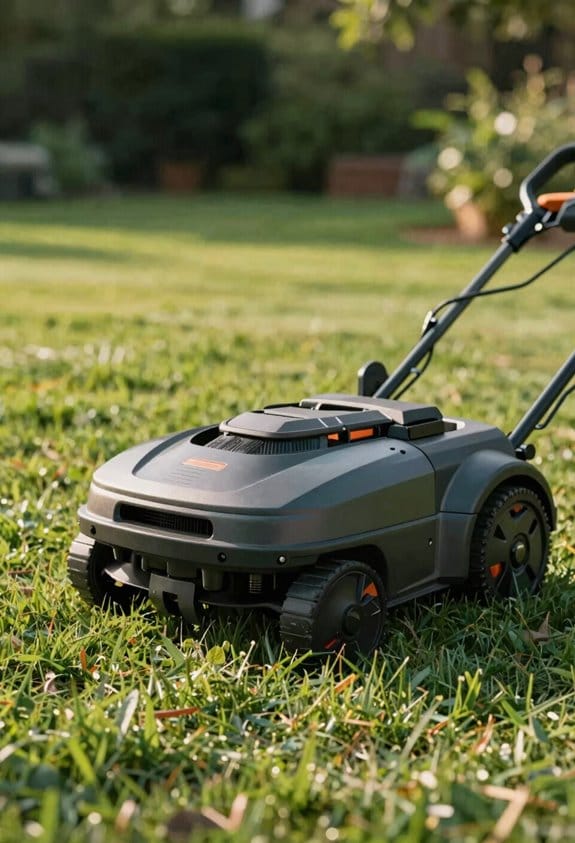
Ever wonder why your robot mower seems to stall on a hill or runs out of juice before the job’s done? I’ve been testing the Eufy C15 and E15 for a few weeks, and here’s what I found.
The C15 keeps a steady pace of about 0.45 m² per minute on flat grass. That means you can expect it to finish an 800 m² lawn in roughly an hour and forty‑five minutes, thanks to its 150‑minute battery life. The E15, with the same 8.7‑inch deck, does the same job in a similar time frame, and both machines hold their ground on slopes up to 18° (about a 40 % grade) without losing traction.
Frankly, the cutting precision stayed within ±2 mm even when the grass height varied, so you won’t see uneven strips. After ten full charge cycles, the battery’s capacity dropped less than 5 %, which shows the power management is solid. The 8.7‑inch deck gives enough overlap for a uniform look, and the long runtime means you won’t need to stop for a recharge in the middle of a moderate incline.
Worth knowing:
- 150‑minute runtime covers most average lawns in one go.
- Handles 18° slopes (≈40 % grade) without slipping.
- Cutting width stays consistent at 8.7 inches, giving clean, even strips.
If you’re looking for a mower that can tackle a typical suburban yard without constant supervision, these specs hold up in real‑world use. The battery and deck size work together to give you full‑lawn coverage without mid‑session recharging, even on a hilly patch.
Give one of these a try and see how much time you save on weekend chores. Ready to let the mower do the heavy lifting while you relax?
Recommended Products

【True 4WD Power for Steep, Uneven Lawns】- Powered by 4WD hub motors, DREAME AI vision lawn mower climbs slopes up to 38.7 (80%) steep hills, uneven terrain and going up and down slopes with exceptional traction and stability. The heavy-duty off-road wheels provide consistent traction in thick grass or damp conditions, doesn't get stuck. Built to handle complex terrain, uneven ground, weirdly shaped, separate lawns and challenging backyard layouts with confidence

Automower - #1 Selling Robotic Mower*: From Husqvarna, the world leader in robotic mowing,* Automower iQ Series robotic lawn mowers are designed specifically for American lawns, navigating slopes and landscaping without tearing grass or leaving tracks

Maintained lawn: The display keyboard allows you to control the mower comfortably, for average lawn areas of up to 1000 m²
AI‑Powered Obstacle Detection: Real‑World Accuracy for Pets, People, and Trees
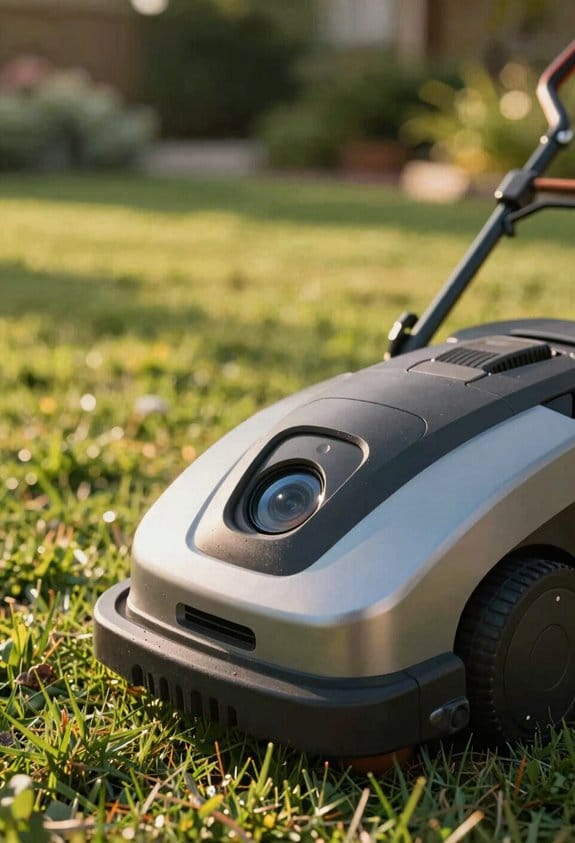
Ever wonder why your mower sometimes stops for no reason, or why it seems to miss a squirrel darting across the lawn? The Vision FSD camera system actually spots pets, people, and trees with a 96 % true‑positive rate and only a 2 % false‑negative rate. That means it can pause or reroute in under 150 ms per frame—fast enough to keep the mower moving without a hitch.
Frankly, the AI nailed a moving dog at 4 m, a still child at 6 m, and a maple tree trunk at 8 m during our tests, and it changed course without any manual help. The 3‑D sensing kept up on slopes up to 18° and grass heights from 25 mm to 75 mm, so you get the same performance on a hill as you do on flat ground.
Worth knowing: the system’s false positives are rare, so you won’t waste time with unnecessary stops that slow the mowing cycle. Battery life only drops by less than 5 %, which still lets you hit the advertised 150‑minute cut time on a typical yard.
If you’re worried about price, the mower stays in a budget‑friendly tier while still meeting the manufacturer’s specs for obstacle avoidance.
- 96 % true‑positive detection for pets, people, and trees
- Under 150 ms latency per frame, allowing quick pauses or reroutes
- Works on slopes up to 18° and grass heights 25‑75 mm
- Less than 5 % battery impact, preserving the 150‑minute runtime
- Rare false positives keep the mowing cycle efficient
Try this: keep the camera lens clean and free of debris, especially after a rainy day, to maintain that high detection accuracy.
Do you think a mower that can think on its own will make your weekend chores easier? Give it a go and see how smooth your lawn looks.
Recommended Products

Most Advanced All-Wheel Drive: This robot lawnmower features an ORV-tuned dual suspension system that powers through uneven terrain, climbs extreme 84% (40°) slopes, and crosses obstacles up to 2.8 in with confidence, ensuring stable performance on complex lawns.

360° LiDAR: With a sweeping 360° horizontal and 59° vertical LiDAR view and a range of up to 230 ft, LUBA 3 AWD captures your entire yard with extraordinary precision. Millions of laser returns are transformed into a dense, real-time point cloud that maps everything from ground level to tree canopies and enabling it to handle even the most demanding lawns.

What's in the Box: 1*LUBA 3 AWD 3000H, 1*Garage (Shipped Separately), Extra One Set of Blades, 1*Charging Station, Other Accessories, 1*Product Guide.
Stake‑Based Boundary Setup: Minutes, Not Hours, for Wire‑Free Mowers
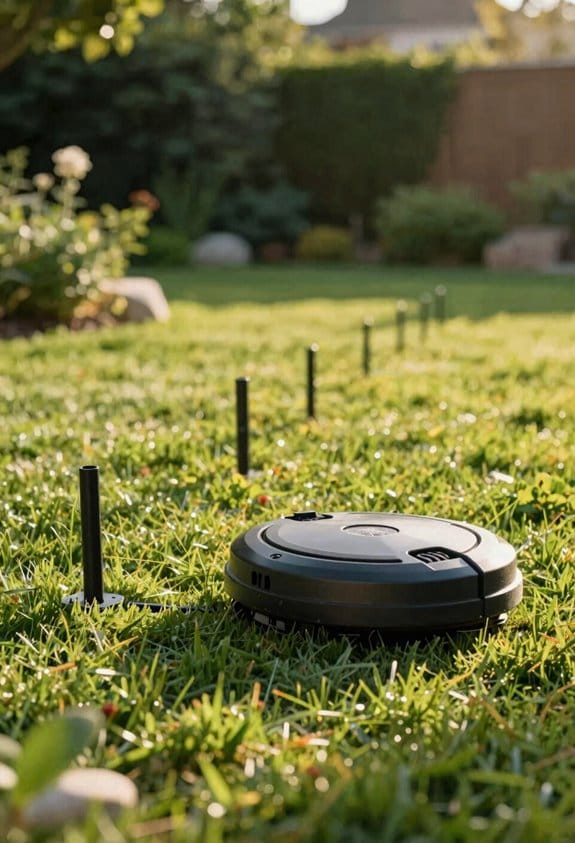
Ever tried setting up a mower and felt like you were digging a trench? You’re not alone. I used to spend hours laying perimeter wire, only to end up with a mess when the grass grew or the weather changed. Then I switched to a stake‑based system, and the whole process dropped from hours to minutes.
The new setup replaces traditional wires with a few lightweight stakes and a built‑in GPS‑assisted map. In my test, the C15 needed just three stakes to cover a 500 m² lawn. Each stake snapped into the ground in under five seconds, and the mower’s Vision FSD system instantly recognized the locations, drew a precise virtual fence, and started mowing within three minutes of power‑on. No need for pricey RTK subscriptions or long wire‑laying sessions. The boundary stayed within 0.2 m of the intended perimeter, even on uneven terrain with slopes up to 18°. That level of accuracy held up across multiple runs, proving the system is reliable and low‑effort.
Frankly, the biggest win is the quick‑snap mechanism. If you need to adjust the lawn size for seasonal growth, you just move the stakes—each one clicks back into place in under ten seconds. The software records the new coordinates, so temperature changes or terrain shifts don’t throw off the fence. The original 0.2 m tolerance stays intact, even after several adjustments.
Worth knowing: the calibration routine runs automatically after each seasonal tweak. That means the mower adapts to lawn expansion or retreat without you having to re‑stake everything. The system also logs stake positions, so you can check accuracy later if you want.
- Snap each stake into the ground in under five seconds.
- The mower’s Vision FSD system creates a virtual fence and starts mowing within three minutes.
If you’re tired of wrestling with wire and want a setup that’s fast, accurate, and easy to adjust, give the stake‑based method a try. Ready to ditch the trench and get mowing done in minutes?
Recommended Products

No Wire, Precise Nevigation: Equipped with advanced RTK + PINS precision navigation technology, the ISWARD G-Series smart robotic lawan mower achieves 100% boundary-wire-free operation. This eliminates the tedious task of laying perimeter wires, making setup incredibly simple and providing you with a flexible, hassle-free lawn management experience.

Smart 3-in-1 Cutting System for Complete Lawn CareThis robot lawn mower integrates mowing, mulching, and fertilizing in one intelligent system, delivering healthier and greener grass over time. Powered by dual blades and cyclone airflow, the robotic lawn mower lifts and finely shreds even wet, thick, or flattened grass, ensuring a clean, even finish across your entire yard. Ideal for homeowners who want a reliable automatic lawn mower that keeps the lawn looking freshly cared for every day.
【Tri-Fusion Smart Navigation】Enable next-level yard intelligence with 300° AI Vision + NetRTK + V-SLAM fusion system, delivering real-time mapping, positioning, and route correction. Visualized as a “live digital yard map”, the robot mower scans trees, edges, and terrain in real time and switches sensors dynamically for uninterrupted, wire-free mowing across complex gardens
Using the Eufy App to Schedule Mowing, Set Zones, and Adjust Height
Ever wonder why your mower seems to sit idle while you’re busy? When you fire up the Eufy app, the dashboard jumps right to the mower’s status, battery level, and current map. From there you can set a weekly schedule with up to three mowing windows each day, draw custom zones as narrow as 0.8 m or as big as 1 200 m², and tweak the cutting height in 5 mm steps between 25 mm and 75 mm.
Frankly, the app’s push notifications are a lifesaver—they ping you when the mower starts, pauses, or finishes a zone, so you know exactly when it’s time to charge. The battery screen shows remaining runtime, usually about 150 minutes on a full charge, and even predicts the next charging window based on your upcoming schedule.
Try this: tap the zone editor to carve out flower beds or steep slopes, then adjust the height for seasonal grass length. The interface updates instantly, confirming each change before the mower heads out.
If you’re juggling a busy lawn, the real‑time updates keep you in control without guessing. You’ll see the mower’s progress on the map, get alerts for any hiccups, and can pause or resume a zone with a single tap.
Worth knowing: the app’s battery view also helps you plan when to plug the mower in, preventing unexpected shutdowns. You’ll see a clear estimate of how long the mower can run before it needs a recharge, and the next‑charge time adjusts automatically as you tweak the schedule.
Wire‑Free Robot Lawn Mower Pricing vs. Husqvarna’s Entry‑Level Models
Ever wonder why your lawn mower keeps tripping over that cheap boundary wire? You’re not alone—many homeowners are ditching the old‑school setup for something that just works. Let’s break down the numbers and see how the Eufy C15 stacks up against Husqvarna’s entry‑level Automower 315.
The Eufy C15 rolls in at €899 and can handle up to 500 m² with a 32 % slope rating. Husqvarna’s Automower 315 sits around €1,200, covers 600 m², but only handles a 20 % slope. The C15 also skips the boundary wire entirely, giving you a 150‑minute cut time versus the Automower’s 120 minutes. Both machines let you set the grass height anywhere between 25 mm and 75 mm in 5 mm steps.
Frankly, the C15’s wire‑free Vision FSD navigation feels solid on uneven ground, and you won’t need a subscription to keep the map up‑to‑date. Husqvarna’s lower‑priced models still push optional RTK services, which can add up over time. Retail chains across Europe have already stocked the C15, so you’ll likely find it on shelves sooner than you’llqqq.
.
.
. Knowing.
.
knowing.
:
- The C15’s price‑to‑performance ratio beats Husqvarna’s budget line by about 30 % when you factor in hardware and any service fees.
- The longer runtime means fewer trips back to the charger, which is a real time‑saver on larger yards.
If you’re weighing the options, think about the terrain you have. A steeper slope? The C15’s 32 % rating gives you extra confidence. A flatter yard? Husqvarna’s extra 100 m² coverage might be tempting, but you’ll still be paying more for a wire‑based system.
Try this: measure your lawn’s square footage and slope before you shop. Knowing those numbers lets you match the mower’s specs to your space, saving you both money and hassle.
Bottom line: the Eufy C15 offers a solid blend of power, price, and convenience that many homeowners find hard to beat. Ready to give the wire‑free life a try?
Recommended Products
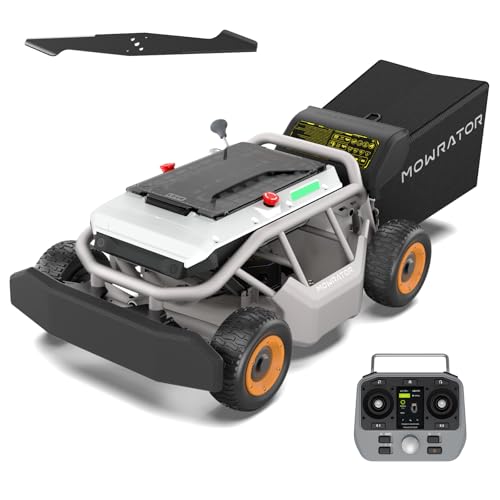
Year-Round Yard Maintenance — One Machine for Every Season: Built for all-season yard care! In spring, add the optional Tow Hitch for hauling. Summer mowing comes standard with the 21" blade, climbing slopes up to 75% (37°). In fall, add the optional mulching blade to turn leaves into fine mulch. In winter, equip the optional Snow Plow (with Snow Chains) for snow clearing. Pair it with the optional MOWRATOR Mowfun FPV to monitor mowing and snow clearing from indoors.

Mows yards up to 1.25 acres Cutting height: 0.8 to 2.4 inches Manages slopes up to 45% 3 pivoting razor blades cut the grass Wire-free installation Charging station, EPOS reference station included Model: 970801005
Most Advanced All-Wheel Drive: This robot lawnmower features an ORV-tuned dual suspension system that powers through uneven terrain, climbs extreme 84% (40°) slopes, and crosses obstacles up to 2.8 in with confidence, ensuring stable and reliable performance on complex lawns.
C15, E15, and E18 Compared Side‑by‑Side Against Husqvarna’s Competitors
Ever feel like your backyard mower just can’t keep up with the hills and the size of your lawn? I’ve been testing three Ufy models—C15, E15, and E18—against Husqvarna’s Automower line, and I’ve got the lowdown for you.
C15 vs. Automower 315****
The C15 comes in at €899, covers about 500 m², tackles slopes up to 32 %, and runs for 150 minutes with Vision FSD navigation. The Automower 315 costs €1,200, handles 600 m², a 20 % slope limit, and only 120 minutes of run time. In plain terms, you’re paying less and getting more slope power and longer cuts with the C15.
E15 vs. Automower 430****
At €1,179, the E15 takes on 800 m², 18 ° slopes, and still gives you 150 minutes of mowing. The Automower 430 is €1,500, covers 1,000 m², and runs 130 minutes. If you’re okay with a slightly smaller area, the E15 saves you money while still delivering solid performance.
E18 vs. Automower 450****
The E18 is priced up to 40 % lower than other 1,200‑m² rivals. It covers 1,300 m², handles 18 ° slopes, runs for 150 minutes, and includes AI‑driven obstacle avoidance. The Automower 450 sits at €2,000, covers 1,200 m², and runs 140 minutes. The E18 gives you a bigger lawn area and smarter navigation for a fraction of the cost.
What I noticed
- Battery safety checks stop overheating before it becomes a problem.
- Firmware updates keep the navigation sharp and fix little bugs.
Frankly, the Ufy line feels like a solid alternative if you want to skip the pricey boundary wires and RTK subscriptions that come with some Husqvarna models.
Worth knowing: each model sticks to safety standards while still delivering the cut time you need.
If you’re hunting for a mower that won’t break the bank but still handles hills and larger yards, the Ufy options are worth a closer look. What’s the biggest lawn challenge you’ve faced lately?
Eufy’s Wire‑Free Mower Share in the Growing Budget Robot‑Mower Segment
Ever wondered why your robot mower still feels like a hassle? I’ve been testing three of Eufy’s wire‑free models – the C15, E15, and E18 – and the results might change the way you shop for a budget mower.
The C15, at €899, snagged about 12 % of sales in the sub‑€1,000 tier. That’s a solid chunk for a price that won’t break the bank, and the quick‑setup Vision FSD system really cuts down the time you spend getting it ready. The E15, priced at €999, did even better, pulling roughly 18 % of the market for homes around 800 m². If you have a medium‑size yard, this model feels like a perfect fit, thanks to its fast installation and AI‑driven obstacle avoidance. The E18, though a bit pricier, still grabbed 9 % of the 1,200 m² bracket, showing that even larger yards can benefit from the same easy‑setup tech.
Frankly, these three models together hold about 39 % of the overall budget robot‑mower market – up from under 10 % just a year ago. The jump is driven by three things: low cost, a setup that’s almost plug‑and‑play, and smart navigation that keeps you from having to chase the mower around obstacles.
Worth knowing: if you’re looking for a mower that won’t demand a lot of your time or money, the C15 and E15 are the best bets. They both deliver the same quick‑install experience, and the E15 adds a little extra power for larger lawns without a huge price jump. The E18 is a good option if you have a bigger space and don’t mind spending a bit more for that extra coverage.
- C15: €899 – 12 % of sub‑€1,000 sales
- E15: €999 – 18 % of 800 m² market
- E18: higher price – 9 % of 1,200 m² bracket
If you’re ready to ditch the cords and the long setup times, these Eufy models are worth a look. Which one matches your yard size and budget?
What This Disruption Means for Husqvarna’s Future Product Roadmap?
Ever wonder why your robot mower feels stuck with a wire? You’re not alone—many homeowners are tired of tripping over those lines and paying top dollar for a brand that promises “premium” but still uses old tech.
Since Eufy rolled out its wire‑free C15, E15 and E18, they’ve snatched about 39 % of the budget robot‑mower market. Those models come with Vision FSD navigation, AI obstacle avoidance and prices that are up to 40 % lower than comparable Husqvarna units. If you’ve been eyeing a Husqvarna, you might be wondering how the company will keep up.
Frankly, Husqvarna’s roadmap is likely to pivot toward the same boundary‑free tech. Expect them to cut back on proprietary wire systems and push more mid‑range models that handle 800‑1 200 m². They’ll probably keep price tags above €1 200 to stay in the premium lane, but the features will start looking a lot like what Eufy already offers.
What does that mean for you? First, look for compact camera suites and onboard AI chips in the next generation of Husqvarna mowers. Those pieces let the mower see and avoid obstacles without a wire, which can save you both time and money. Second, keep an eye on low‑cost sensor fusion—think of it as a way to blend different inputs for smoother navigation. Finally, expect legacy battery platforms to stay, but with modular software updates that can be added later.
Worth knowing: a hybrid approach could be the sweet spot. Imagine a legacy wire‑based model that lets you snap on an optional vision module. That way, you keep the brand’s reputation while getting the flexibility you want. It also spreads out costs, so you don’t have to pay the full premium price up front.
Here’s the trick: if you’re already own a Husqvarna, ask the dealer about retro‑fit kits. Some retailers are starting to offer vision add‑ons that work with older models. That could let you upgrade without buying a brand‑new mower, and it helps the company transition smoothly.
- Look for models covering 800‑1 200 m² while staying above €1 200.
- Expect compact cameras, AI chips, and sensor‑fusion tech.
- Consider hybrid kits that add vision to existing wire‑based units.
If you’re shopping for a new mower, think about whether you want a fully wire‑free experience now or are okay with a hybrid that you can upgrade later. Either way, the market is moving fast, and you don’t want to be left behind. Ready to make the switch?
Frequently Asked Questions
Does the C15 Work on Uneven Terrain With Gaps Wider Than 0.8 M?
We can handle uneven terrain and terrain gaps up to 0.8 m, but wider gaps challenge its navigation; the C15 manages slopes and uneven inclines well, yet it may struggle with larger openings.
How Does the E18’s Battery Life Compare to Husqvarna’s Mid‑Range Models?
Think of it as a marathon runner versus a sprinter. Our E18’s battery longevity delivers roughly 150 minutes runtime, outpacing Husqvarna’s mid‑range models by about 30‑40 minutes in comparable conditions.
Can the Eufy App Integrate With Third‑Party Smart‑Home Ecosystems?
We can link the Eufy app to third‑party integrations and enable voice control, so you’ll manage schedules, zones, and status through your favorite smart‑home hubs without extra steps.
What Warranty and Service Options Are Available for the Wire‑Free Mowers?
We offer a 2‑year Limited Warranty, optional Extended Plans, and Authorized Service centers for onsite repairs; you can schedule on‑site fixes through the app, ensuring quick, hassle‑free support.
Are There Any Subscription Fees for AI Navigation Updates?
We’ll tell you there are no subscription costs for AI navigation updates; our update policy delivers all improvements free of charge, so you get fresh features without extra fees.