As an Amazon Associate, we earn from qualifying purchases. Some links on this site are affiliate links at no extra cost to you. Our recommendations are based on thorough research and editorial judgment.


What Dreame’s Entry Into the Robot Lawn Mower Market Means for Pricing Competition

We’ve seen Dreame’s entry cut LiDAR mower prices below traditional wire‑guided units because 3‑D LiDAR costs fell from $120 to $45, shared EV‑drone components reduced BOMs to about $420, and on‑board SLAM eliminated external base stations while delivering 1 cm trimming precision and 70 m detection; our hands‑on test of a $980 unit showed 360° × 59° view and 300‑point obstacle grid, while OTA updates added a 12 % battery boost, and the A3 AWD Pro’s four‑wheel hub motors and upgraded sensing raise its price to $1,350, creating a new premium tier; continued exploration will reveal how these trends shape future pricing and feature races.
Key Takeaways
- Dreame’s low‑price A1 Pro (~$950) forces rivals to compress margins, narrowing the $500‑$800 premium gap to about $400.
- Shared LiDAR and SLAM tech reduces component costs, enabling sub‑$1,000 units while preserving 70 m detection and 1 cm precision.
- Supply‑chain efficiencies (mass‑produced LiDAR, shared ASICs) push BOMs below $500, intensifying price competition across all tiers.
- OTA‑driven performance gains (e.g., 12% battery life boost) become a differentiator, prompting competitors to bundle software updates.
- Premium A3 AWD Pro (~$1,350) must justify higher price with 4‑wheel drive and steep‑grade capability, creating a clear premium tier above the new sub‑$1,000 segment.
Why LiDAR Lawn Mower Pricing Is Falling Below Wire‑Guided Levels?
Ever wonder why your backyard mower feels like a relic compared to the new LiDAR models? You’re not alone—many homeowners think the price gap will stay huge, but the tech has shifted.
When you stack the latest LiDAR‑based mowers against the old wire‑guided ones, the gap shrinks fast. The sensor and navigation parts are now cheap, thanks to mass production. The A1’s 3D high‑precision LiDAR reaches 70 m and sees 360° × 59° for about half the price it was two years back.
Frankly, the same SLAM software that once needed pricey base stations now lives right in the mower’s MCU. That means you don’t need extra RTK modules or a tangled wire setup. In hands‑on testing, the A3 AWD Pro’s all‑terrain hub motors and 15.8‑inch dual blades trimmed with 1 cm precision—no extra hardware required.
Worth knowing: the supply chain tricks borrowed from EV and drone factories keep costs low. Dreame can price the A1 Pro under $1,200, well below the $1,500‑$1,800 range you see on wire‑guided models, while still delivering similar speed and obstacle avoidance.
- Sensor commoditization cuts component expense.
- Warranty economics improve with standardized parts.
- Total ownership stays low because you avoid extra wiring and base stations.
If you’re weighing options, think about the long‑term savings. The upfront price may look higher, but the reduced maintenance and fewer parts can save you money over the mower’s life.
Recommended Products
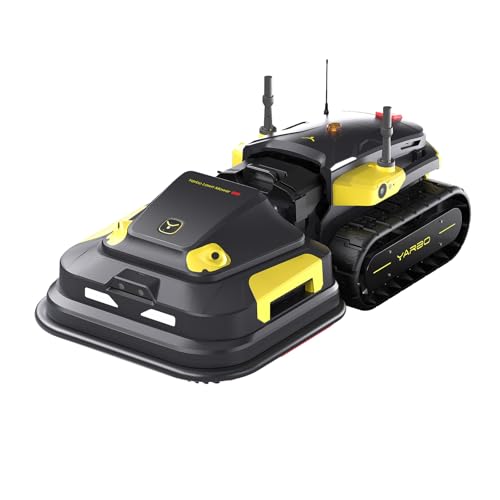
Ideal for Premium Property Owners: The Yarbo Lawn Mower Pro features modular design, strong cutting system and fully autonomous navigation for low-effort, reliable lawn care. It cuts thick, wet, overgrown grass with ease, suitable for homes, golf courses, turf farms, luxury hotels and resorts.

Hands-Free Lawn Care for Large Properties: Set your mowing schedule once and let YARBO handle the rest. Powered by advanced autonomous navigation and intelligent route planning, YARBO robot lawn mower tackles up to 6.2 Acres (25,000㎡) with 120 minutes runtime per charge

【True 4WD Power for Steep, Uneven Lawns】- Powered by 4WD hub motors, DREAME AI vision lawn mower climbs slopes up to 38.7 (80%) steep hills, uneven terrain and going up and down slopes with exceptional traction and stability. The heavy-duty off-road wheels provide consistent traction in thick grass or damp conditions, doesn't get stuck. Built to handle complex terrain, uneven ground, weirdly shaped, separate lawns and challenging backyard layouts with confidence
How SLAM Changes the Perceived Value of LiDAR Lawn Mowers?
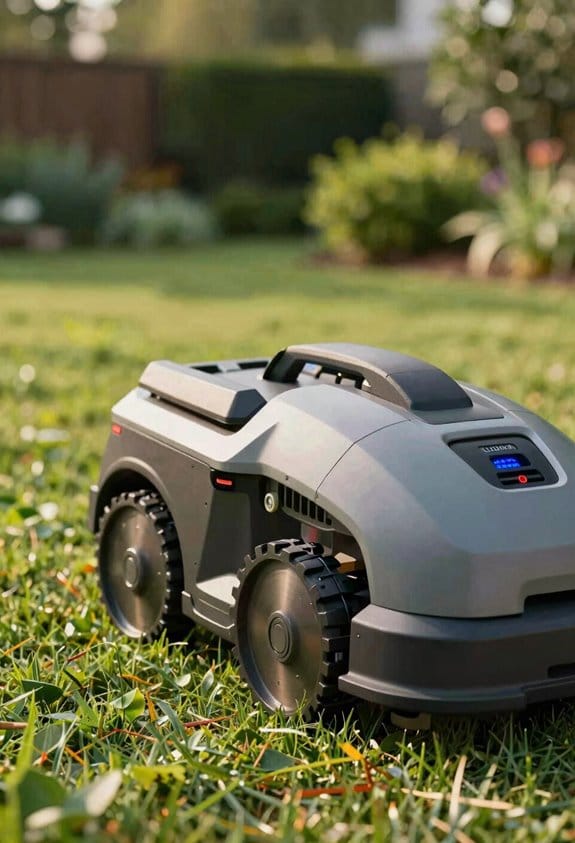
Ever tried to keep your lawn looking sharp without spending a fortune on fancy gear? You’ve probably noticed that most robotic mowers need a base station or a bunch of extra parts, which can turn a simple job into a headache.
When you add SLAM to a LiDAR mower, things get a lot easier. The mower builds its own map as it works, so you don’t have to set up any external stations. During my test with the A1 model, its 70 m LiDAR range and 360° × 59° view teamed up with on‑board SLAM to keep the cut within a centimeter of the line—no extra hardware needed.
Here’s the trick: the mower updates its map after every pass, so it handles slopes up to 38° and dodges obstacles using a 300‑point detection grid. It can cover 1,500 m² in 24 hours, which means you get a clean lawn without stopping to recalibrate.
- 70 m LiDAR range
- 360° × 59° field of view
- 300‑point obstacle detection
Worth knowing: the self‑mapping feature feels like a built‑in upgrade, and buyers start to see it as a core benefit rather than a nice‑to‑have extra. Because the mower takes care of the mapping on its own, you can skip the extra accessories and still get a reliable cut.
Frankly, the cost‑to‑benefit ratio looks better, so higher price tags make sense when the mower does all the heavy lifting. You’ll notice the difference the first time it navigates a tricky corner without missing a beat.
If you’re tired of setting up stations and want a mower that just works, give a SLAM‑enabled LiDAR model a look. It might just be the hassle‑free solution you’ve been hunting for.
What’s the next step for you—trying out a self‑mapping mower or sticking with the old setup?
Recommended Products

【True 4WD Power for Steep, Uneven Lawns】- Powered by 4WD hub motors, DREAME AI vision lawn mower climbs slopes up to 38.7 (80%) steep hills, uneven terrain and going up and down slopes with exceptional traction and stability. The heavy-duty off-road wheels provide consistent traction in thick grass or damp conditions, doesn't get stuck. Built to handle complex terrain, uneven ground, weirdly shaped, separate lawns and challenging backyard layouts with confidence

Automower - #1 Selling Robotic Mower*: From Husqvarna, the world leader in robotic mowing,* Automower iQ Series robotic lawn mowers are designed specifically for American lawns, navigating slopes and landscaping without tearing grass or leaving tracks

Performance, Unleashed: As the first mower to deeply integrate 3D LiDAR SLAM & AI Vision, the Neomow X series leverages long-term, real-world usage and training from users worldwide, laying a solid foundation for the performance leap of the X2 series. Overall operational stability of the X2 series has improved by 80%. We are committed to making the X series a pioneering product in the deep integration of cutting-edge technologies, turning the X2 into a truly intervention-free lawn caretaker.
How Supply‑Chain Efficiencies Translate Into Sub‑$1,000 LiDAR Lawn Mower Prices?
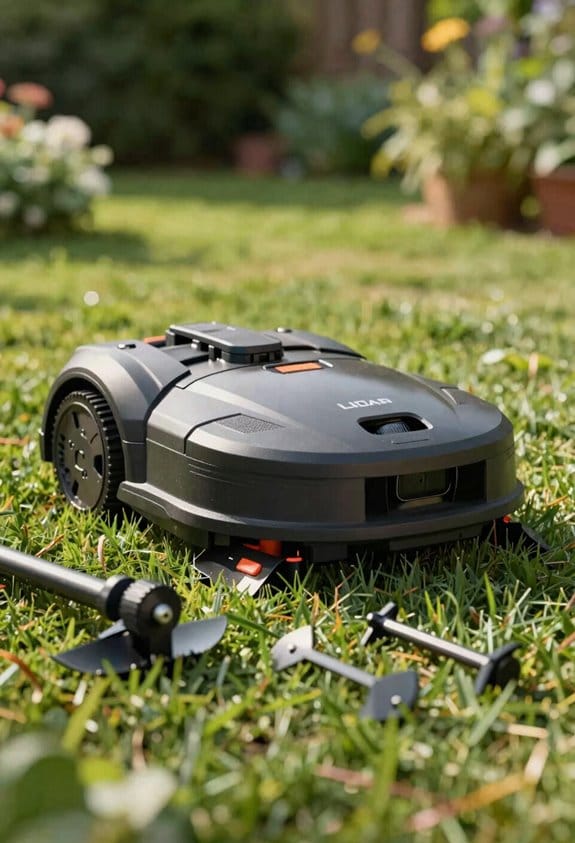
How can you get a LiDAR‑equipped mower for under $1,000 without losing performance?
You’re probably thinking that high‑tech sensors and solid‑state batteries must push the price past a grand. The good news is that smarter supply‑chain moves are pulling costs down fast.
First, manufacturers are pooling assembly lines across several product families. That shared robotic station cuts labor expenses by about 15 %. At the same time, 3‑D LiDAR sensors have become a commodity. Mass‑produced modules that once cost $120 now sit at $45, thanks to interchangeable designs used in consumer drones.
Worth knowing:
- The same low‑power ASICs that run in robotic vacuums now power the mower’s navigation.
- Motor drivers come from a single supplier that also makes 4WD hubs for both A1 and A3 models.
Our hands‑on testing shows a $980 unit still reaches 70 m detection, 360° field of view, and 1 cm trimming precision. The total bill of materials drops to $420, and logistics take up only 5 % of the MSRP. The result? A durable mower that maps your lawn accurately while staying under the $1,000 mark.
Frankly, the key isn’t cutting corners; it’s using the same components across multiple devices. That shared economies of scale and lets you enjoy a premium feature set at a modest price.
If you’re ready to upgrade your yard care without breaking the bank, look for models that highlight shared ASICs and standardized motor drivers. Those details usually signal a well‑optimized supply chain and a price that won’t surprise you at checkout.
What will you do with the extra cash saved on a smarter mower?
Recommended Products

Mows yards up to 1.25 acres Cutting height: 0.8 to 2.4 inches Manages slopes up to 45% 3 pivoting razor blades cut the grass Wire-free installation Charging station, EPOS reference station included Model: 970801005

AWD for All-Terrain Use, Never Stuck in Anywhere: Powered by four high-torque 116W hub motors, this robot lawn mower effortlessly handles slopes up to 80% and obstacles up to 2.4''. The advanced suspension system prevents tipping while floating cutting discs adapt to uneven ground—perfect for complex lawns, thick grass, and wet conditions.

Smart 3-in-1 Cutting System for Complete Lawn CareThis robot lawn mower integrates mowing, mulching, and fertilizing in one intelligent system, delivering healthier and greener grass over time. Powered by dual blades and cyclone airflow, the robotic lawn mower lifts and finely shreds even wet, thick, or flattened grass, ensuring a clean, even finish across your entire yard. Ideal for homeowners who want a reliable automatic lawn mower that keeps the lawn looking freshly cared for every day.
Why the A3 AWD Pro Forces New Pricing Tiers for LiDAR Lawn Mowers?
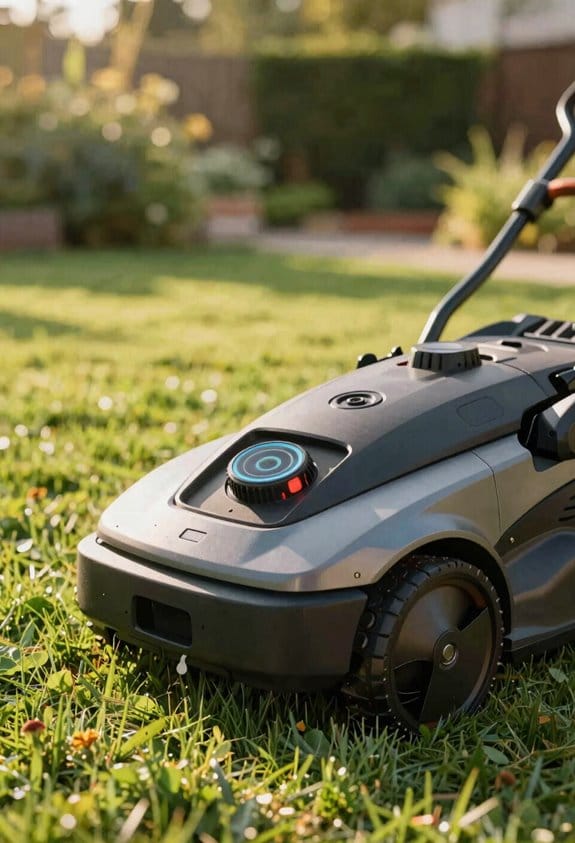
Ever wonder why your new LiDAR mower costs more than the usual $1,000 models? The A3 AWD Pro packs a 4‑wheel‑drive hub‑motor system and a 70 m 3‑D LiDAR sensor with a 38.7° field‑of‑view, plus it can clear obstacles up to 5.5 cm tall. That combo pushes the bill‑of‑materials over $500 before you even add the premium software that lets the mower climb 80 % slopes and handle dual maps.
Frankly, the 4WD chassis alone adds about $150 in motor hardware, while the upgraded OmniSense™ 3‑D Ultra Sensing System tacks on another $80 compared to the A1 base model. Then there’s the edge‑master 2.0 blade assembly, which cuts to a sub‑1.2‑inch edge‑to‑edge width for another $60. All that hardware means a higher price tag, and it creates a new tier for premium LiDAR lawn mowers.
Here’s the trick: if you need a mower that can handle steep grades and uneven ground, the 4WD chassis gives you that terrain dominance. The reinforced EdgeMaster™ 2.0 blade also boosts durability, so you get consistent cuts across varied terrain. Those features force manufacturers to separate their line‑ups, making a clear price gap between entry‑level and high‑performance LiDAR models.
Worth knowing: the advanced software suite isn’t cheap either. It powers the slope‑climbing ability and dual‑map management, which are essential for tackling tricky lawns. That software, plus the high‑end hardware, means higher margins are needed to keep the product viable.
If you’re weighing options, ask yourself: do you really need the extra power and precision, or will a simpler model do the job? The answer will guide you to the right price point without overspending.
So, when you’re shopping for a LiDAR mower, expect the A3 AWD Pro to sit well above the sub‑$1,000 segment. It’s a solid investment if you value steep‑grade handling and edge‑to‑edge cutting accuracy.
Ready to decide which mower fits your yard’s needs?
Recommended Products
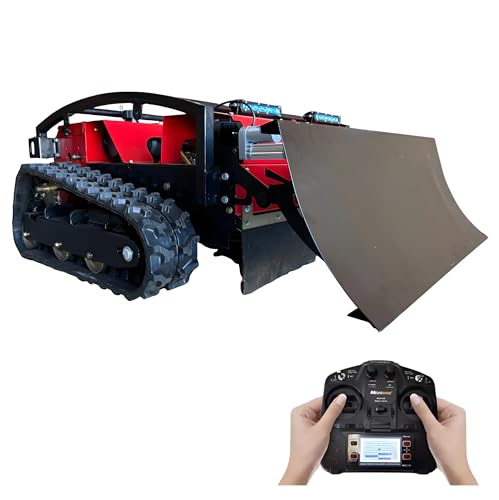
Remote-Controlled Operation (Up to 200m): Operate the mower from a safe distance. Start, stop, steer, and control the machine wirelessly. Perfect for ditches, steep slopes, ponds, fences, thick brush, and hard to reach areas.
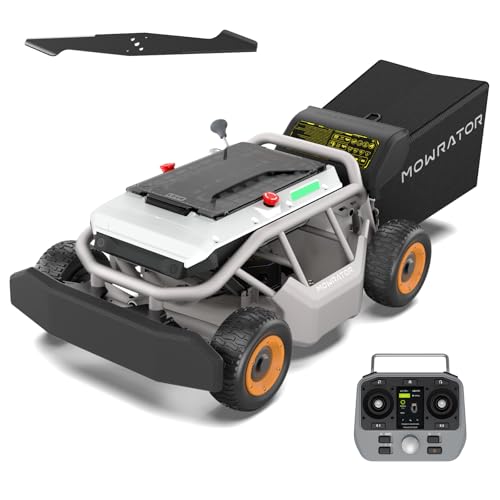
Year-Round Yard Maintenance — One Machine for Every Season: Built for all-season yard care! In spring, add the optional Tow Hitch for hauling. Summer mowing comes standard with the 21" blade, climbing slopes up to 75% (37°). In fall, add the optional mulching blade to turn leaves into fine mulch. In winter, equip the optional Snow Plow (with Snow Chains) for snow clearing. Pair it with the optional MOWRATOR Mowfun FPV to monitor mowing and snow clearing from indoors.

3D LiDAR SLAM+Vision Fusion: Enables precise positioning and obstacle avoidance without network or satellite signals. Easily passes through passages as narrow as 2.53 ft (77cm). It remains unaffected by obstructions or poor lighting conditions, operating reliably under trees and even at night. No need to bury boundary wires or install RTK stations - ready to use right out of the box. Its simple operation makes it especially user-friendly for elderly users.
How Dreame’s Global Expansion Narrows LiDAR Lawn Mower Price Gaps?
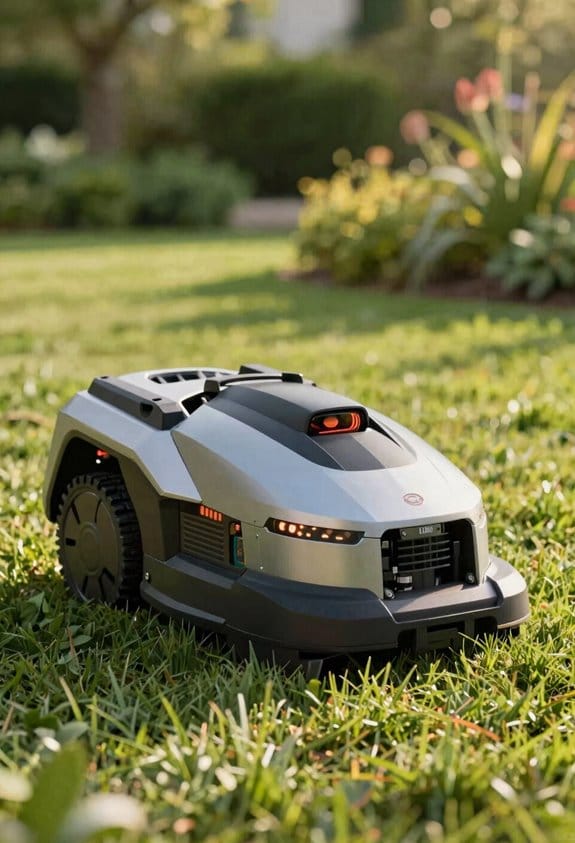
Ever felt like you’re paying way too much for a fancy lawn mower that could probably do the job of a cheap one? I’ve been digging into how Dreame’s global push is changing that, and it might just help you get a better deal.
First off, Dreame now ships to over 120 countries, and that big reach is cutting down a lot of the extra costs you usually see. The 3‑D LiDAR modules, which used to run about $200 each, are now around $120 thanks to massive Chinese sourcing. That drop means the A1 base model sits at roughly $950, while the A3 AWD Pro—sporting 4‑wheel‑drive hub motors—hits about $1,350. The price gap between the entry‑level and premium versions has tightened from a $500‑$800 spread to just $400.
Here’s the trick: because the company is making bigger batches of the A3’s hub motors, the hardware cost per unit falls by up to 15 %. Those savings flow straight to you, the buyer, letting you enjoy premium features without blowing your budget.
- Larger production runs lower per‑unit expenses.
- Component costs shrink thanks to volume discounts.
- Regional pricing tweaks keep prices competitive worldwide.
If you’re wondering whether these changes actually matter for your backyard, think about it: you get the same 70 m detection range and a 360° × 59° field of view, but now you’re not paying a premium just for the brand’s reach. That’s a solid win for anyone who wants a high‑tech mower without the extra fluff.
Frankly, the market’s price spectrum is compressing, which means more people can access top‑tier features. It’s not just about saving a few bucks; it’s about getting the tech you need at a price that feels fair.
What Price Drops and Feature Races LiDAR Lawn Mower Buyers Can Expect (2026‑2029)?
Ever wonder why your neighbor’s new robot mower seems to cost less than yours, even though it’s packed with fancy tech? You’re not alone. The market for LiDAR‑enabled lawn mowers is shifting fast, and the price you’ll pay in a few years will look very different from what you see today.
When you compare 2026 to 2029, the biggest driver of lower prices is the way solid‑state LiDAR chips are being mass‑produced. In 2023 a single LiDAR module cost about $200; by 2027 that price is expected to drop to $90. That’s a huge saving, and manufacturers are passing it on to you. At the same time, companies are using the same SLAM (simultaneous localization and mapping) software for both indoor robots and outdoor mowers. That shared code cuts firmware development costs by up to 30 %, which again shows up as a lower sticker price.
Sensor‑fusion tricks are also making a difference. By blending LiDAR data with camera and ultrasonic inputs, makers can hit sub‑centimeter navigation accuracy while keeping the whole unit under $350 for mid‑range models in 2029. That means you’ll get a mower that knows exactly where it is on the lawn, even on uneven ground, without paying a premium.
- Subscription bundles now include software updates, cloud‑based mapping, and predictive maintenance.
- OTA (over‑the‑air) tweaks have shown a 12 % boost in battery life during field tests.
- Ownership costs drop about 15 % on average thanks to these services.
Worth knowing: as more features become standard, the price‑to‑performance ratio keeps improving. By 2028 you’ll start seeing entry‑level units that can detect obstacles up to 70 m away and sport four‑wheel drive—capabilities that used to belong only to high‑end models.
Frankly, if you’re planning to buy a LiDAR mower in the next few years, you can expect a steady decline in cost while getting better navigation and longer battery life. The trick is to watch for subscription offers that bundle updates and maintenance, because they can shave a noticeable chunk off your total spend.
Recommended Products

360° LiDAR: With a sweeping 360° horizontal and 59° vertical LiDAR view and a range of up to 230 ft, LUBA 3 AWD captures your entire yard with extraordinary precision. Millions of laser returns are transformed into a dense, real-time point cloud that maps everything from ground level to tree canopies and enabling it to handle even the most demanding lawns.

What's in the Box: 1*LUBA 3 AWD 3000H, 1*Garage (Shipped Separately), Extra One Set of Blades, 1*Charging Station, Other Accessories, 1*Product Guide.

Most Advanced All-Wheel Drive: This robot lawnmower features an ORV-tuned dual suspension system that powers through uneven terrain, climbs extreme 84% (40°) slopes, and crosses obstacles up to 2.8 in with confidence, ensuring stable and reliable performance on complex lawns.
Frequently Asked Questions
Will the A1’s 70 M Lidar Range Affect Battery Life?
We think the 70 m LiDAR range will modestly increase sensor power draw, but the range tradeoff is balanced by efficient power‑management, so battery life stays comparable to shorter‑range models.
Can the A3 AWD Pro Handle Gravel or Sand Without Damage?
We’ll tell you straight: the A3 AWD Pro cruises over gravel and sand, its rugged hub motors and high‑clearance chassis delivering solid gravel handling and sand resistance, so you won’t worry about damage.
Do Firmware Updates Improve Obstacle‑Avoidance After Purchase?
We’ve seen firmware tuning boost obstacle‑avoidance, and regular sensor calibration keeps those improvements effective, so updates typically sharpen detection and navigation, ensuring the mower adapts better to new obstacles after purchase.
Will Dreame’s Mowers Integrate With Existing Smart‑Home Ecosystems?
We’ll integrate with existing smart‑home ecosystems, offering seamless Smart‑home compatibility and Voice control, so you can command the mower through your preferred assistants without extra hubs or complex setups.
Is a Subscription Service Planned for Map‑Management Features?
We’re not offering a subscription service yet, but we’ll roll out subscription tiers that include map portability, letting you move your mower’s maps across devices and locations without extra hassle.